
In the world of digital marketing, success begins with a strong online presence. Your website is the digital face of your business, and ensuring it’s optimized for search engines is paramount. If you’re looking to improve your website’s performance and rank higher on search engine results pages (SERPs), you’ve come to the right place. I am Clinton Ghosh, a professional Digital Marketing Consultant with over four years of experience in the local and international marketplace, including platforms like Upwork and Fiverr. I’ve successfully completed 1000+ projects for clients worldwide. In this article, I will provide you with a comprehensive guide to conducting an SEO audit for your website.
Why Conduct a Website SEO Audit?
Before we dive into the checklist, let’s understand why a website SEO audit is essential. A website audit is like a health check-up for your site. It helps identify issues that might be holding your website back from reaching its full potential. Here are a few key reasons to consider:
- Discover and Resolve Issues: An audit uncovers technical and on-page SEO issues, such as broken links, slow loading times, and missing meta tags, which can negatively impact your site’s performance.
- Boost Your Search Rankings: By addressing these issues, your website becomes more appealing to search engines, leading to improved rankings and increased visibility.
- Enhance User Experience: A well-audited site offers a seamless and engaging experience for visitors, reducing bounce rates and increasing user engagement.
- Stay Competitive: Regular audits keep you ahead of the curve, ensuring your site is up to date with the latest SEO best practices and algorithms.
The Comprehensive SEO Audit Checklist
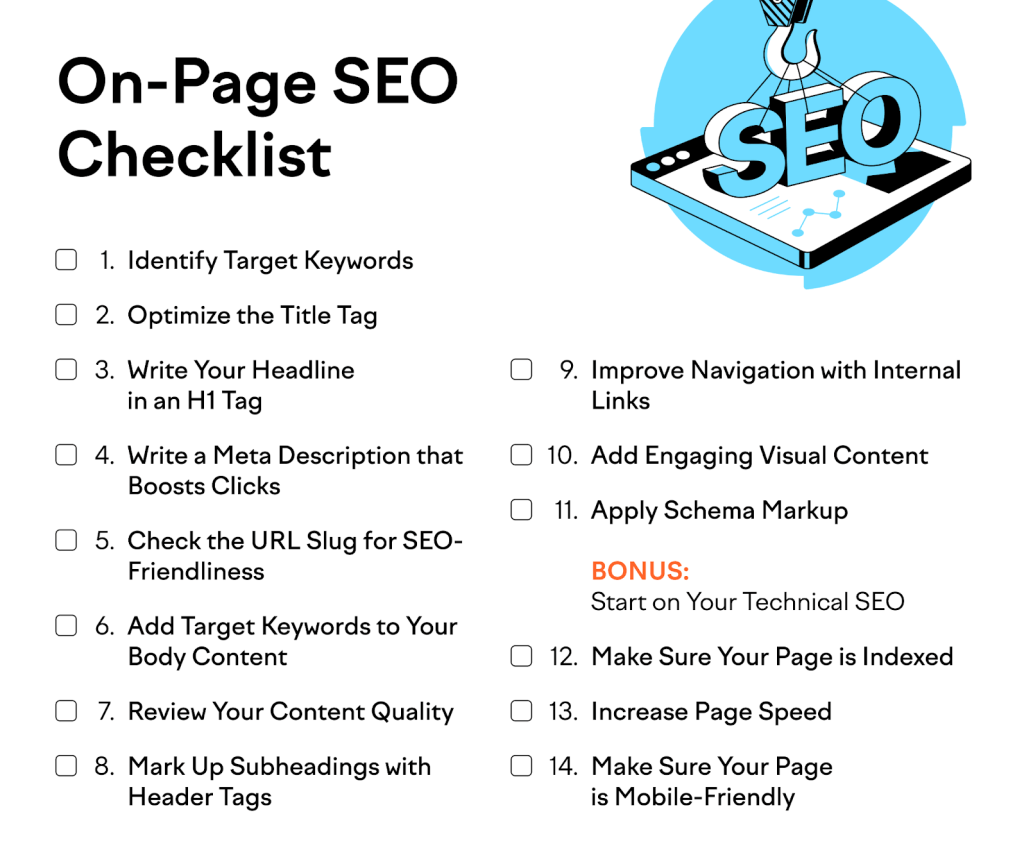
Now, let’s delve into the comprehensive website SEO audit checklist. This checklist covers all aspects of your website’s SEO, ensuring no stone is left unturned.
- Technical SEO
- Check for broken links and 404 errors.
- Optimize your site’s loading speed.
- Ensure your website is mobile-friendly.
- Verify proper XML sitemaps and robots.txt files.
- On-Page SEO
- Examine your meta titles and descriptions for optimization.
- Analyze header tags (H1, H2, H3) for proper keyword usage.
- Check for keyword density in your content.
- Ensure image alt tags are correctly utilized.
- Content Quality
- Review the quality and relevance of your website’s content.
- Remove or rewrite duplicate or thin content.
- Optimize content for target keywords.
- Backlink Profile
- Audit your backlink profile for toxic or spammy links.
- Build high-quality, relevant backlinks to improve authority.
- User Experience
- Enhance user experience with easy navigation and clear calls to action.
- Optimize for mobile devices and ensure responsive design.
- Keyword Research
- Perform updated keyword research to target the right audience.
- Identify long-tail keywords with low competition.
- Analytics
- Set up Google Analytics to monitor website traffic and user behavior.
- Utilize data to make informed decisions.
- Competitor Analysis
- Analyze the strategies of your top competitors and identify opportunities.
- Local SEO
- Optimize your website for local search by creating Google My Business listings and consistent NAP (Name, Address, Phone) data.
- Security
- Ensure the security of your website by using HTTPS and monitoring for potential threats.
Why Choose My SEO Services

As a Digital Marketing Consultant with extensive experience, I am well-versed in all aspects of SEO and digital marketing. I’ve worked with clients from various industries and have a proven track record of delivering results. My skills in website audits, keyword research, and content optimization have consistently led to improved online visibility and business growth.
If you’re looking to take your website’s SEO to the next level, please don’t hesitate to reach out. Contact me at digitamar.it@gmail.com, and let’s discuss how I can tailor a customized SEO strategy for your business.
 Helping Small Businesses Growth
Leave a comment